Hosted by the Carolina Equine Sports Medicine Education Foundation
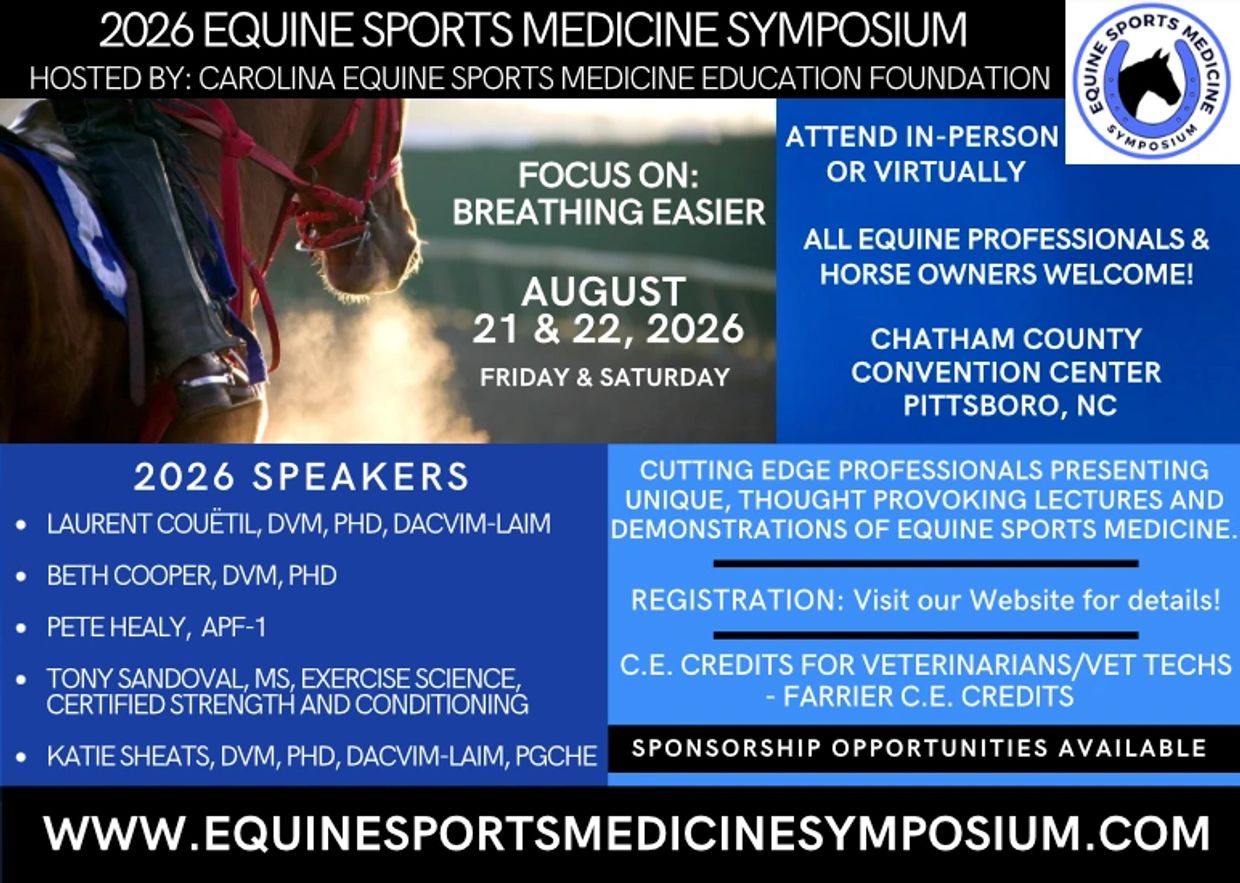
our 2026 Speakers:

Laurent Couëtil, DVM, PHD, DACVIM-LAIM
Dr. Couetil is a professor of large animal medicine at Purdue University College of Veterinary and
Director of the Donald J. McCrosky Equine Sports Medicine Center and Equine Research Program. He
obtained his veterinary degree from the National Veterinary School of Alfort, France and then worked
several years in equine practice in France.
Dr. Couetil is a professor of large animal medicine at Purdue University College of Veterinary and
Director of the Donald J. McCrosky Equine Sports Medicine Center and Equine Research Program. He
obtained his veterinary degree from the National Veterinary School of Alfort, France and then worked
several years in equine practice in France. Dr. Couetil completed a large animal medicine residency at
Tufts University and a PhD in respiratory physiology at the University of Liège, Belgium. He is a
diplomate of the American College of Veterinary Internal Medicine (ACVIM) and past President of the
Large Animal Internal Medicine specialty of the ACVIM.
Dr. Couetil’s clinical and research expertise centers on equine respiratory diseases, particularly asthma
and exercise-induced pulmonary hemorrhage. He has authored over 125 peer-reviewed publications
and book chapters that have advanced the diagnosis and management of equine respiratory disorders.
Dr. Couetil has been a frequent invited speaker at national and international scientific meetings, and has
served on editorial boards and professional committees within the ACVIM and the Veterinary
Comparative Respiratory Society.

Beth Cooper, DVM, PHD
Dr. Beth Cooper attended NC State University for her undergraduate degree and stayed at NC State for vet school. She graduated from vet school in 2021 and completed a PhD in the Sheats laboratory at the CVM studying novel diagnostic and therapeutic targets for equine asthma. Dr. Cooper is an equine emergency field service veterinarian at
Dr. Beth Cooper attended NC State University for her undergraduate degree and stayed at NC State for vet school. She graduated from vet school in 2021 and completed a PhD in the Sheats laboratory at the CVM studying novel diagnostic and therapeutic targets for equine asthma. Dr. Cooper is an equine emergency field service veterinarian at NC State, researches equine asthma, and is passionate about teaching students. Outside of work, you will typically find Beth outdoors with her wild 2-year old daughter and husband, at the barn riding, or wrangling her two golden retrievers.

Pete Healy, APF-1
Pete Healy, APF-1
Pete Healey started his professional shoeing career in 1988. In 2002 he began a working relationship with Alamo Pintado Equine medical Center in Los Olivos, CA. Pete is a graduate of Dr. Reddens’ Advanced Equine Podiatry course and hold an APF-1 certification with the International Association of Professional Farriers. He has been a contr
Pete Healey started his professional shoeing career in 1988. In 2002 he began a working relationship with Alamo Pintado Equine medical Center in Los Olivos, CA. Pete is a graduate of Dr. Reddens’ Advanced Equine Podiatry course and hold an APF-1 certification with the International Association of Professional Farriers. He has been a contributing author for the American Farriers Journal, The Cowboy Way and Ranch and Reata magazines. He holds three patens for measuring systems for the equine foot. Pete is a co-founder of the now dissolved non-profit Podiatry Education Foundation. Pete published ‘Evaluating Radiographs for Equine Foot Management in 2018 and co-authored a paper for AAEP in 2022 titled ‘How to Evaluate and Balance the Distal Limb Using Specific Anatomical and Radiographic Parameters.’ Pete’s current publication is “Pete Healey’s Foot of the Week, 100 Equine Podiatry Case Studies’.
our 2026 Speakers:
Tony Sandoval, MS, Exercise Science, Certified Strength and Conditioning
Coach Tony Sandoval is a strength and conditioning coach with more than 15 years of experience helping equestrian athletes improve their health, resilience, and riding performance. He holds a graduate degree in Exercise Science and is the creator of the EqueStrength Development Program, a training system built specifically for riders who
Coach Tony Sandoval is a strength and conditioning coach with more than 15 years of experience helping equestrian athletes improve their health, resilience, and riding performance. He holds a graduate degree in Exercise Science and is the creator of the EqueStrength Development Program, a training system built specifically for riders who want to perform at a higher level in and out of the saddle.
Coach Sando specializes in working with equestrians across all levels of the sport, using a performance-based approach to help riders build strength, move better, and stay healthier for the long term. His work focuses on improving rider fitness, addressing common injuries and pain patterns, and helping athletes create a stronger, more effective partnership with their horse.
He is also known for using advanced technology to lead rider athletic performance assessment clinics, giving equestrians clear, data-driven insight into how their bodies affect their riding. In addition, Tony developed the Return to Ride Program, which helps injured riders safely and confidently get back in the saddle.

Katie Sheats, DVM, PHD, DACVIM-LAIM, PGCHE
Dr. Katie Sheats is a Professor of Equine Medicine and Primary Care and is board certified in Large Animal Internal Medicine. She currently serves as the Associate Dean of Professional Education and Admissions at NC State College of Veterinary Medicine. Dr. Sheats is the PI of the Equine Health Innovations laboratory and her research focu
Dr. Katie Sheats is a Professor of Equine Medicine and Primary Care and is board certified in Large Animal Internal Medicine. She currently serves as the Associate Dean of Professional Education and Admissions at NC State College of Veterinary Medicine. Dr. Sheats is the PI of the Equine Health Innovations laboratory and her research focus is on neutrophil-mediated diseases including sepsis and asthma in horses. Her research seeks to better understand mechanisms of neutrophil mediated tissue injury in order to identify novel diagnostic or therapeutic targets. Dr Sheats is also passionate about education and has three teaching certifications, is a Fellow of the Higher Education Academy and a recognized Distinguished Expert by the Academy of Veterinary Educators. She is currently pursuing her masters in veterinary education. Dr Sheats grew up riding Hunter Jumper in Winston-Salem, NC and is an NC State CVM Class of 2005 graduate. She currently lives in New Hill, NC.
our 2026 Scholarship & Research Grand Winners:
Kim Howell 2026 CESMEF Research Grant Winner
Research Project "Metabolic Predictors of Steroid-induced Laminitis Risk"
Results will be presented at the 2027 Equine Sports Medicine Symposium.
Kim Howell completed her DVM at the Cummings School of Veterinary Medicine at Tufts University in 2020, and then went on to complete a one-year equine rotating internship at North Carolina State
Research Project "Metabolic Predictors of Steroid-induced Laminitis Risk"
Results will be presented at the 2027 Equine Sports Medicine Symposium.
Kim Howell completed her DVM at the Cummings School of Veterinary Medicine at Tufts University in 2020, and then went on to complete a one-year equine rotating internship at North Carolina State University. She then continued on at NCSU for a three-year equine internal medicine residency. Kim joined the Schnabel Lab in 2024 as a PhD student in NCSU’s Comparative Medicine and Translational Research Training Program. Kim’s interests lie in the cross over between internal medicine and orthopedic disease, and her thesis work is focused on how Equine Metabolic Syndrome affects how we manage equine athletes with a particular focus on corticosteroid-associated laminitis.
Kim's research project entitled "Metabolic Predictors of Steroid-induced Laminitis Risk" aims to investigate metabolic biomarkers and dynamic endocrine tests that can be used by equine practitioners in the field to predict an individual horse's insulin response to steroid joint injections, a factor that is thought to drive risk of laminitis following treatment. Twelve horses will undergo multiple tests of metabolic health including measurement of hormones produced by fat cells, testing for pituitary pars intermedia dysfunction (PPID), assessment of the insulin response to carbohydrates and a high protein meal, and assessment of the blood sugar response to insulin. Horses will then receive joint injections in the upper and middle carpal joints with a steroid (triamcinolone) and their insulin and blood glucose response to the steroid will be measured. By evaluating multiple tests at once followed immediately by a steroid injection trial the study aims to identify markers that are highly correlated with the post-steroid insulin response for each horse. These markers can then be further developed for veterinarians to use as diagnostic tools in the field to predict an individual horse’s risk of steroid-associated laminitis prior to injection, allowing veterinarians to adjust their therapeutic approach in high-risk animals and greatly reduce the impact of steroid-induced laminitis.
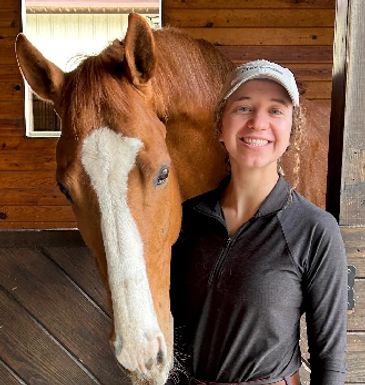
Seline Stoop 2026 CESMEF Scholarship Award Winner
Seline Stoop is a fourth year veterinary student at NC State’s College of Veterinary Medicine. She grew up surrounded by horse country in Kennett Square, PA where she rode and worked at barns throughout her high school and undergraduate years. She graduated from University of Delaware where she obtained her Honors B.S. in Pre-Veterinary M
Seline Stoop is a fourth year veterinary student at NC State’s College of Veterinary Medicine. She grew up surrounded by horse country in Kennett Square, PA where she rode and worked at barns throughout her high school and undergraduate years. She graduated from University of Delaware where she obtained her Honors B.S. in Pre-Veterinary Medicine and B.S. in Agriculture and Natural Resources with minors in Equine Science and Spanish. At NC State, Seline has worked as a weekend veterinary assistant for the Large Animal Hospital and as a part-time assistant for the Equine Ambulatory ER service. Seline plans to do an equine rotating internship after graduation. Currently, she is interested in several aspects of equine veterinary medicine including internal medicine, general practice, and sports medicine. In her future career, Seline wants to achieve excellence in patient care and make an impact on the people and horses in the equine community.


Chatham County Agriculture & Conference Center
1192 U.S. Hwy West Business, Pittsboro, NC 27312


CE Credits From:
2026 APPROVAL PENDING
NCVMB-Veterinarians & Vet Technicians -14 Hours (2026 Approved)
International Assoc. of Prof. Farriers -12 Hours (2026 Approved)

Hampton Inn & Suites
Just 4 miles from the Equine Sports Medicine Symposium at the Chatham County Agriculture & Conference Center! A beautiful new hotel, surrounded by all kinds of restaurants and stores for your convenience.
The Hotels direct phone number is (919) 542-4284

Article subject was presented at 2025 ESMS
Researchers Assess Prevalence of ID & Subclinical Laminitis
Insulin dysregulation in sport horses might be underrecognized because these horses don’t always look like your obvious metabolic cases.
October 3, 2025, By:Alexandra Beckstett, EquiManagment